Welcome to the November 2007 edition of Optimum Connections, the monthly
e-newsletter from Russell Louie and Margaret Auld-Louie at Optimum Choices, LLC.
This newsletter is sent to the friends and customers of Russell & Margaret as
well as people who signed up for a drawing at our booth at a fair or event. If you wish
to unsubscribe, see the bottom of this e-mail for instructions. To receive this newsletter in your e-mail,
click
here.
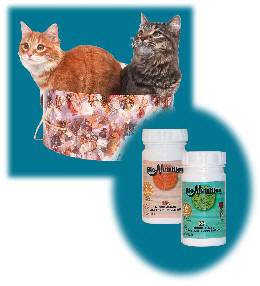
The Manufacturer has increased the prices for
BioPreparation and BioSuperfood as of November 1, 2007. Current MSRP
(Manufacturer's Suggested Retail Price) are as follows:
BioPreparation for Pets
MSRP
BP-F2+ Core - 60 caps
$25.00
BP-F3+ Forte - 60 caps
$45.00
BioSuperfood for People
BSF-F2 Core - 180 caps
$65.00
BSF-F3 Forte - 180 caps
$125.00
Sales Material
Booklet on Bio-Algae Concentrates
$7.95
DVD: The Magic is BAC
$4.95
In order to keep our prices at the lowest possible
level for our loyal customers, Optimum Choices will sell all our remaining stock
at the current lower prices.
These discounted prices will only last until our current stock is exhausted.
After that or on December 1, 2007, whichever comes first, all prices will go up
to the new Manufacturer's Suggested Retail Price listed above. With the
increased retail price, the amount of algae powder per bottle will also increase
and the capsule format will change from the current 190 mg, 250-capsule bottle
to 290 mg, 180-capsule bottle.
In order to maintain Health Canada NPN licensing, all new batches of
BioSuperfood must reflect the exact specifications of the granted licenses. The
application for licensing started in 2004 had specified a capsule size of 290 mg
and a bottle quantity of 180 capsules. After a long waiting period, the NPN
licenses were finally granted based on this bottle size and capsule format in January 2007.
Therefore, all future
batches of bottles must be identical to the size specified in the application granted.
In other words, the bottle must
contain 180 capsules instead of the current 250 and the capsule size must be the
larger size of 290 mg in contrast to
the current size of 190 mg.
This change in capsule format must be done in order to stay in compliance with
Health Canada's granted license. The new 180-capsule format
will actually contain 52.2 grams of algae powder per bottle instead of 47.5 grams
as in the 250-capsule bottle. This is a
gain of 4.7 grams or 25 additional capsules (190 mg size).
So, the price increase is also accompanied by a corresponding increase in amount
of algae powder in each bottle.
With this new 290 mg size, we suggest one maintains the same frequency of intakes
per day while there exist the opportunity to split a capsule in two or three
intakes of 100 mg or 145 mg.
The BioPreparation capsule size and quantity per bottle are not subject to this
licensing and thus will not change at this time. For full details from the
manufacturer, read their
letter here.
November 13, 2007 — BAC ACADEMY, Part 5
of 6, HOLISTIC BECAUSE YOU CAN!
SPECIAL GUEST:
This
teleconference call will be lead by guest, Russell Louie, and will focus on
BAC (Bio-Algae Concentrates) for animals. Russell
has gained valuable experience using BAC with dogs and cats over the last 6
years. Russell will explain how using this
revolutionary whole food product can yield some very amazing, unexpected,
holistic results.
For details and telephone number, click
BAC Academy
A talk with Dr.
Roland Thomas, Naturopath and
Russell
Louie
Saturday, November 17th, 2007 - From 10:30AM to
12:30AM
Front Range Community College - College Hill
Library
3705 West 112th Avenue, Westminster, CO 80031
Recently, some municipalities have passed laws banning certain breed dogs. Their
rational is that all dogs of a certain breed are vicious and dangerous to people and
the public must be protected by law. Our philosophy is not to blame the breed of
dog but the lack of training by their owners. It is just as wrong to stereotype
one type or class of people as all being bad. Our guest author this month is
Lorraine May, founder of The Misha May Foundation, a non-profit rescue
organization in Denver.
By Lorraine May, MA, MAT
Executive Director, Founder and Head Trainer
First of all, most dogs are reactive, not aggressive. Most dogs are frightened,
and therefore, utilize warning behavior to try to make the threat go away.
Aggression, or intent to harm, may follow for a dog with limited options.
Individual dogs have varying degrees of tolerance. There are many things you can
do to increase your dog’s capacity for living a life without threats, as well as
perceived threats.
Whether you agree with the title or not, it does present the issue in a way that
focuses on the possibilities of prevention and rehabilitation, rather than
inflated statistics and media hysteria. In my years of volunteering at shelters,
training and boarding for the public, and rescuing and rehabilitating dogs, I
have never once met a dog that I could, without a doubt, say was born aggressive
and dangerous. I believe they exist, and I also believe they were bred that way,
on purpose, for a destiny other than becoming a pet. I have also met less than a
handful of dogs that I believed were not able to be rehabilitated.
However, the rehabilitation process is often time consuming, requires advanced
skills, and is best executed as a labor of love. Preventing the development of
aggressive behavior patterns in a dog is far wiser than trying to modify them
later. Tragically, most could have easily been avoided in the first place.
Having said that, only get a puppy if you are truly committed to learning how to
raise it right. Many dogs are given away when they reach a size that outweighs
the amount of training the owner has invested.
Since most dogs resort to aggressive behavior like barking, lunging, growling
and biting when they are afraid, it makes sense to minimize threats in their
world. To build trust and minimize your dog’s need to be aggressive, try
engaging, with your dog of any age, according to the following guidelines.
Attune
Be a Detective
Breed Specific Safety
Consistency and Boundaries
Containment for Safety
Enjoy
Positive Associations
Protect
Provide Guidance
Punishment
Read
Reasonable Expectations
Reward or Ignore
Set up for Success
Socialization
Teach
True Leadership
Volunteer
Win - Win Tactics
Attune—Walk a yard in her paws. Find out who your individual dog is. Then
celebrate her individuality. Treat her just as you hope your friends and family
will treat you.
Be a Detective—What is the motivation here? Assume your dog was simply trying
to get what he needed. How can you help him understand the rules and be
successful?
Breed Specific Safety—Do not be lulled into thinking that one particular breed
of dog is always safe, while another is dangerous. Each dog should be evaluated
on an individual basis. If you fear a certain breed, stay away from it, but
don’t become an accomplice in cruelty and injustice.
Consistency and Boundaries—It’s only fair to stick to the rules you created.
Jumping up engagingly or cutely begging at the table are either permitted or
not. Inconsistency is confusing and cruel, and defeats your own training
efforts.
Containment for Safety—Be sure that your dog is safely contained within a real
fence. Tying or chaining her, leaves her vulnerable to teasing or abuse, a
target for wild animal attacks, and a likely candidate for increased aggressive
behavior. Electric fences (and all of the fancy techno devices based on punishment) create
negative associations for the dog, with whatever was happening when she was
shocked. Formerly friendly dogs have developed aggression toward humans, other
dogs, or whatever is associated with the shock or punishment.
Enjoy—Choose a dog who will bring enjoyment to you and will fit nicely into
your life style. Having a dog is a responsibility, but it doesn’t have to be a
burden. Choose and train wisely.
Positive Associations—Help your dog view the world as a friendly place. If your
dog is worried, let him take a cue to relax from you. Over time you are more
likely to create a positive association and see decreased fear and anxiety. If your dog has been reprimanded when other dogs approach, for example, he will
be worried, and perhaps react more vehemently, each time other dogs approach.
Protect—Remove your dog from situations she cannot handle. Just as you would
not allow someone to torment your child, don’t let anyone, be it family member
or professional, torment your dog. I have removed dogs from vet exams where the vet’s rough handling or minimizing
of the dog’s discomfort was setting the dog up for a life of fear about going to
the vet. I have stopped a trainer where I could see the technique was raising
the anxiety level of the dog. I have changed my groomer when I saw that the
finished product was more important than the dog’s well being.
Provide Guidance—Assume that your child (and some other people) and your dog
will have interactions which one or both of them cannot handle. Be right there
to help.
Punishment—Let me begin by saying I am against it except as a very last resort.
There are a myriad of choices before resorting to punishment, and in most cases,
it simply is not indicated. You will hear certain professionals say that this
type or that type isn’t harmful. They are simply not paying attention. Or they
haven’t a well developed repertoire of techniques. I prefer to invest the time, talent and energy to modify a behavior in a way
that makes sense to a dog and doesn’t cause them to fear or mistrust me. I am
not in favor of anything that delivers an aversive, when a positive association
could have been created. Even something as seemingly harmless as a water bottle
or a citronella collar can be devastating to a sensitive dog. However, if used, punishment is so powerful, it should eliminate the behavior
immediately. If you have to keep doing it, then it didn’t work and you are
simply torturing your dog. Dogs who spend their lives being leash corrected,
sprayed with citronella, or shocked by collars or fences are not being taught or
trained. They are being punished.
Read—Dogs Bite: but balloons and slippers are more dangerous - Janis Bradley.
“Your chances of being killed by a dog are roughly one in 18 million…The
supposed numbers of dog bites splashed across the media are absurdly inflated by
dubious research and by counting bites that don’t actually hurt anyone.” The
benefits of living with dogs far outweighs the negatives. Become educated.
Become a better dog owner.
Reasonable Expectations—Think about how long it takes you to learn something.
Be realistic regarding the time it will take your dog. Some learning takes a
lifetime.
Reward or Ignore—Reward the things your dog does that are appropriate. Ignore
the bad behavior if possible. My dog jumps on me, I completely ignore him; as
soon as he sits, I praise and pet. If he does it again, I leave the room.
Attention getting behavior? Not anymore.
Set up for Success—Have a fairly accurate idea of what your dog is capable of.
When you help him feel confident and certain about his life, he can relax and
listen to what you want and need from him.
Socialization—This is happening only when your dog is enjoying himself and
feels safe. Sending a nervous dog to doggy day care is traumatizing, not
socialization.
Teach—“Hello. I’m a dog from the canine culture. We don’t have leashes or
collars or heeling, and we don’t necessarily share. Anything on the floor is in
our world“. Assume that your dog is acting out of ignorance, just as you would
in a foreign country where you don’t know the language and customs.
True Leadership—True leaders wish to maintain stability, establish fair rules,
and lower the anxiety and stress of their family group. Leaders who resort to
force and intimidation are typically insecure about their position and power.
Volunteer—You will learn so much by volunteering for a reputable rescue group.
Win - Win Tactics—Do not confront when there is another choice - and there
almost always is. When there is confrontation, there is a winner and a loser.
Neither you nor your dog wants to be the loser. You might get hurt; he might
lose his home or worse.
303-271-1649 866-305-2306 (toll-free) Normal office hours are 11:00 AM – 7:00 PM Mountain Time (U.S.). If you would
like a return call outside those hours, please specify what days and times are
best.
Nothing on this website has been evaluated by the FDA. This information
is not intended to diagnose, treat, cure or prevent any disease. Please
see a qualified healthcare practitioner for any disease or illness.

 In order to maintain Health Canada NPN licensing, all new batches of
BioSuperfood must reflect the exact specifications of the granted licenses. The
application for licensing started in 2004 had specified a capsule size of 290 mg
and a bottle quantity of 180 capsules. After a long waiting period, the NPN
licenses were finally granted based on this bottle size and capsule format in January 2007.
Therefore, all future
batches of bottles must be identical to the size specified in the application granted.
In other words, the bottle must
contain 180 capsules instead of the current 250 and the capsule size must be the
larger size of 290 mg in contrast to
In order to maintain Health Canada NPN licensing, all new batches of
BioSuperfood must reflect the exact specifications of the granted licenses. The
application for licensing started in 2004 had specified a capsule size of 290 mg
and a bottle quantity of 180 capsules. After a long waiting period, the NPN
licenses were finally granted based on this bottle size and capsule format in January 2007.
Therefore, all future
batches of bottles must be identical to the size specified in the application granted.
In other words, the bottle must
contain 180 capsules instead of the current 250 and the capsule size must be the
larger size of 290 mg in contrast to
 the current size of 190 mg.
This change in capsule format must be done in order to stay in compliance with
Health Canada's granted license. The new 180-capsule format
will actually contain 52.2 grams of algae powder per bottle instead of 47.5 grams
as in the 250-capsule bottle. This is a
gain of 4.7 grams or 25 additional capsules (190 mg size).
So, the price increase is also accompanied by a corresponding increase in amount
of algae powder in each bottle.
the current size of 190 mg.
This change in capsule format must be done in order to stay in compliance with
Health Canada's granted license. The new 180-capsule format
will actually contain 52.2 grams of algae powder per bottle instead of 47.5 grams
as in the 250-capsule bottle. This is a
gain of 4.7 grams or 25 additional capsules (190 mg size).
So, the price increase is also accompanied by a corresponding increase in amount
of algae powder in each bottle. This
teleconference call will be lead by guest, Russell Louie, and will focus on
BAC (Bio-Algae Concentrates) for animals. Russell
This
teleconference call will be lead by guest, Russell Louie, and will focus on
BAC (Bio-Algae Concentrates) for animals. Russell 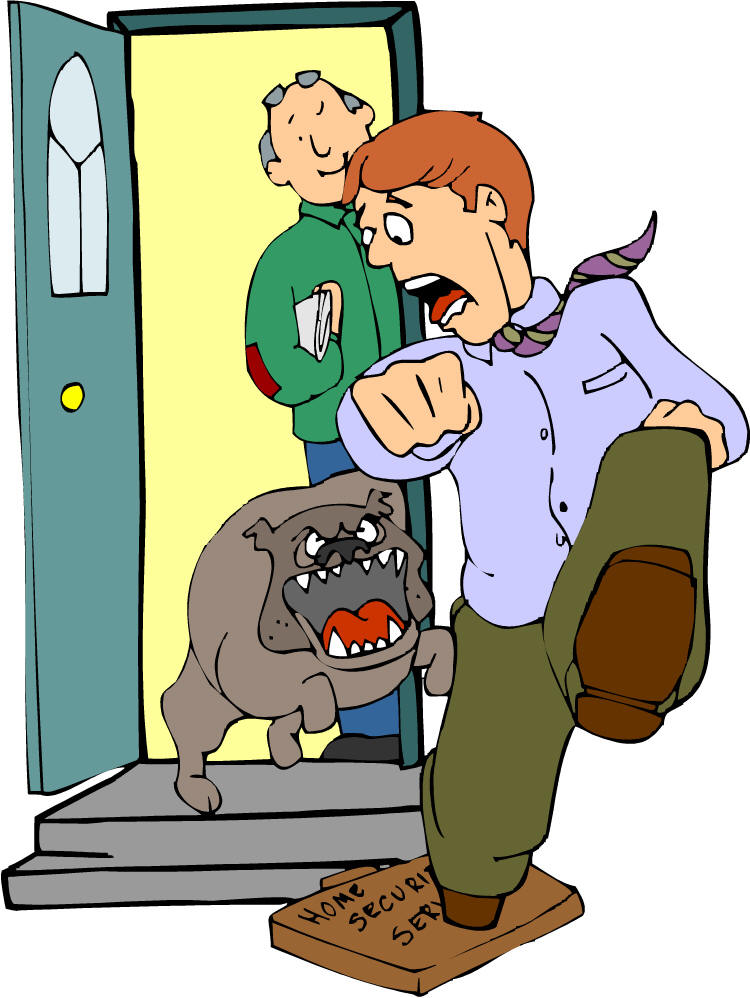 Recently, some municipalities have passed laws banning certain breed dogs. Their
rational is that all dogs of a certain breed are vicious and dangerous to people and
the public must be protected by law. Our philosophy is not to blame the breed of
dog but the lack of training by their owners. It is just as wrong to stereotype
one type or class of people as all being bad. Our guest author this month is
Lorraine May, founder of The Misha May Foundation, a non-profit rescue
organization in Denver.
Recently, some municipalities have passed laws banning certain breed dogs. Their
rational is that all dogs of a certain breed are vicious and dangerous to people and
the public must be protected by law. Our philosophy is not to blame the breed of
dog but the lack of training by their owners. It is just as wrong to stereotype
one type or class of people as all being bad. Our guest author this month is
Lorraine May, founder of The Misha May Foundation, a non-profit rescue
organization in Denver.
 Provide Guidance—Assume that your child (and some other people) and your dog
will have interactions which one or both of them cannot handle. Be right there
to help.
Provide Guidance—Assume that your child (and some other people) and your dog
will have interactions which one or both of them cannot handle. Be right there
to help.