 |
|
|
|
|
| |||||
|
|
Optimum ConnectionsNews from Optimum Choices, LLCJuly 2006To receive this newsletter in your e-mail, click here. ContentsCurrent news
|
|
|
|
We believe BioSuperfood/BioPreparation (BSF/BP) is one of the few truly holistic whole food products on the market today because it:
Enhances the body's own ability to heal
Energizes the master glands of the brain that regulate the rest of the body's glands and organs
Activates the body to clean the intestines so that the body assimilates nutrients better and one can eventually decrease the dosage of BSF/BP and any other supplements
Remember for optimum results, it is best to spread your dosage of BioSuperfood equally over the entire day. For example, if one needs to take 6 capsules per day take two capsules with each meal for maximum results. If you have any questions regarding how to use BioSuperfood or BioPreparation, please contact us. For a limited time, both the 180 capsule and 250 capsule bottles will be available as we will be permanently transitioning to the 250 capsule size. Click here to order.
For a limited time get Multi-Pure's popular new Aqua Dome water filter for $100 off the retail price! This is a $180 value filter for only $79 + tax, shipping/handling and a $4 registration fee (to become a distributor). We took advantage of this offer recently and are passing on the word to everyone that wants to drink healthy water for less money. Multi-Pure is a leader in water filtration technology and with this promotion, we were able to afford the purchase of a filter, eliminating trips to the health food store to fill up our 5 gallon bottles with filtered water. See our article on Healthy water for you and your pets to find out why we recommend filtering your water.
For more information, see our Multi-Pure page, e-mail us or call 303-271-1649 or 866-305-2306 (toll-free).
 Oil
of the month
Oil
of the monthby Russell Louie
An essential oil blend that cleanses, disinfects and neutralizes mildew, cigarette smoke, and disagreeable odors in the air. It also disinfects and cleanses cuts, scrapes and bites from spiders, bees, hornets, and wasps. Most people use PurificationTM to cleanse the air of disagreeable odors and disinfect (purify) hard surfaces and other objects (e.g., door knobs, motel rooms, restrooms). But during the summer months PurificationTM can do so much more. With West Nile Virus and other mosquito-borne diseases surfacing, PurificationTM can be used as a topical insect repellent and in a diffuser to clear the room or outdoor area of flying insects. PurificationTM can be invaluable as an aid to disinfect and cleanse bites from spiders, bees, hornets, and wasps. A boy recently came to me with a wasp bite just below the eye. It was stinging and the bump was growing fast. I carefully (to avoid getting the oil in the eye) dabbed some PurificationTM oil on the bite puncture and this brought immediate relief from the stinging and stopped the spread of venom immediately.
Dilute 1 part PurificationTM to 1 part vegetable oil. Possible skin sensitivity so test first. Diffuse in the air 15 to 30 minutes every 3 to 4 hours. Directly inhale or add 2-4 drops to bath water. Apply on location to cuts, sores, bruises, or wounds. Put 4-8 drops on cotton ball and place in vents of house or car. This works great in hotel rooms. Add 2 drops to a wet cloth and put in clothes dryer. Makes a great natural insect repellant.
The information in this article is from the Essential Oils Desk Reference, which
can be ordered here:
Essential Science Publishing, 1216 South 1580 West, Orem, Utah 84058, (800)
336-6308, www.essentialscience.net.
PurificationTM does so much more. Here are some customer testimonials:
Several drops of PurificationTM applied neat, several times a day helped save 2 cases of gangrenous big toes and the first case was so bad the man had been admitted to the hospital for the amputation to be done. Surgery was canceled after PurificationTM was used for just 3 days.
My neighbor told me how she, after 8 months, still has pain in her finger where she had been poked by a century plant and my sister told me her story of pain and misery because these plants supposedly have some poison that makes wounds not heal for the longest time if ever. My wound healed perfectly with no pain after using PurificationTM.
I got rid of mold after our basement flooded last spring with PurificationTM and Thieves in a spray bottle mixed with water. Pretty strong mixture sprayed directly on the mold (each mixture separately).
Son had a staph infection on the skin. The doctor said it was healing up great. My son didn't get the prescription filled for the antibiotics but instead used the oils I gave him - PurificationTM and Thieves.
Just wanted to let you know the essential oils I bought for the spa (i.e. PurificationTM and geranium) are working a treat. I also tested the water for bacteria/nitrates/nitrites with a testing kit after I had been using the oils for a while and it was all clear, which convinced my partner. The spa smells fabulous and it is sooooooo much better on our skin.
Gary Young (founder of Young Living Essential Oils) uses PurificationTM instead of chemicals in his motor home water tank.
Click here to order on our Young Living World Essential Oils website. Click on Product Catalog, then go to Essential Oil blends, or call us at (303) 271-1649 or (866) 305-2306 (toll-free).
These statements have not been evaluated by the Food and Drug Administration. This product is not intended to diagnose, treat, cure, or prevent any disease.
 The Pluses and Perils of Dog Parks
Excerpt from "Practice for Real Life!" by Ted & Tiffany Terroux
A dog park can be a wonderful place for dogs to play, burn off energy and maintain good social skills. It is also a place where perilous or traumatic events happen sometimes that not only cause harm to dogs physically, but psychologically as well. By being knowledgeable, responsible and observant, you can help to insure that you, your dog and those around you have a safe, fun and constructive dog park encounter. By accompanying healthy, well-socialized and obedient dogs, obeying park rules and practicing good etiquette, every dog and handler can have a fun and positive experience. To help make everyone's dog park visits safer and more enjoyable, we offer the following tips and advice.
Most veterinarians recommend that puppies be at least 16 weeks of age before they are exposed to a multiple-dog environment. This would apply to any park or neighborhood, not just a dog park. The immune system of most puppies prior to 16 weeks of age simply isn't mature enough to readily fight off common viruses and bacteria that are found in all places where dogs congregate and relieve themselves. Sensitive puppies can be overwhelmed psychologically by the experience and should be introduced gradually over a period of weeks. Some puppies and juvenile dogs have too much exuberance for other dogs to accept in a dog park environment. Adult dogs often take offense with a very energetic youngster and may treat him with disdain if the youngster lunges towards them at 22 miles per hour.
The hormones of an intact dog will contribute to an increase in the dog's capacity for protectiveness, possessiveness and aggression. These are not traits that are conducive to peaceful mingling in dog parks. Dogs that are spayed and neutered by six months of age are much less likely to have problems around other dogs. Dogs that are altered later in life will retain some tendency to exhibit established behaviors that could create problems in a multi-dog environment. While some intact dogs get along well in most circumstances with other dogs, this should be taken as the exception rather than the rule.
A dog park that is not well maintained or where people fail to clean up after their dogs regularly can present health or safety hazards for your dog. Consider the benefits of taking your dog to a safer, cleaner environment. Contact local government to inform them of the problem and perhaps find out about alternative parks elsewhere. A healthy immune level is also essential to maintaining a dog's good health, particularly when exposing your dog to any multiple-dog environment. Keeping your dog's vaccinations up to date or monitoring your dog's immunity levels with titer tests will help guard your dog from common viruses and bacteria. Regardless of how infrequently your dog may need vaccination, having an annual check-up with your veterinarian is always a wise choice to head off potential problems in the early stages. Ask your veterinarian about the Bordetella vaccination which helps to protect dogs against some strains of Canine Bronchitis (often mistakenly referred to as "kennel cough.") It is inadvisable to take a sick dog to a dog park for obvious reasons. It is also inadvisable to take dogs that are elderly or in pain because they will often be more inclined to be temperamental towards other dogs.
 Socialize
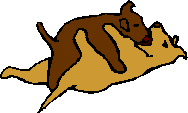
Many people think a dog park is the right place to start socializing dogs and some have actually been successful, but dogs should be well socialized before they ever have their first dog park experience. Socialization should begin right from the day you bring a puppy home from their litter at eight weeks of age. The most critical stage occurs between 4 to 6 months of age. During this stage, one exposure a week is generally not enough to establish a pattern of good socialization skills—three or four times a week will likely garner desirable results. While it is unsafe to take an 8 to 16 week old puppy into a multiple dog environment, you should pursue a relationship in a private environment with a healthy and well-socialized adult dog that lives nearby. An adult dog will do a much better job of teaching a puppy social etiquette than another puppy or juvenile dog. People that have more than one dog in their household may think that their dogs are well socialized because they get along well with each other, but it is crucial for dogs to socialize outside of the pack. A good relationship is one where the adult dog will play calmly with, but not bully, the puppy. The adult dog should also discipline the puppy when the puppy pushes too far. Acceptable forms of discipline would include a growl, a snap or by pinning the puppy on the ground without doing injury to the puppy. If the puppy persists in being a pest in spite of these warnings, an adult dog would be justified to exhibit a harsher response, but should never maintain a prolonged attack, attempt to seriously harm or even pursue the puppy.
 Because we place such a strong emphasis on the importance of socialization,
you might think it's impossible to over-socialize dogs with other dogs and other
people outside of the household, but it is relatively easy to do. You may have
noticed that people with service dogs actually discourage people and other dogs
from interacting with their dogs. Too much socialization can make it more fun
for the dog to be elsewhere other than with the owner and reduces the dogs'
bonding with, and responsiveness to, the owner. It is to your benefit for your
dog to have more fun with you than through interactions with other dogs or
people. Your dog will become more reliable if he associates the fun he is having
with you, not romping with a pack of dogs 50 yards away. At the very least, have
your dog do numerous things for you on command while you are in the park and use
the socialization opportunities as a reward. However, if you feel that it is
unimportant to optimize your dog's relationship with you, over-socialization
wouldn't be a concern.
Because we place such a strong emphasis on the importance of socialization,
you might think it's impossible to over-socialize dogs with other dogs and other
people outside of the household, but it is relatively easy to do. You may have
noticed that people with service dogs actually discourage people and other dogs
from interacting with their dogs. Too much socialization can make it more fun
for the dog to be elsewhere other than with the owner and reduces the dogs'
bonding with, and responsiveness to, the owner. It is to your benefit for your
dog to have more fun with you than through interactions with other dogs or
people. Your dog will become more reliable if he associates the fun he is having
with you, not romping with a pack of dogs 50 yards away. At the very least, have
your dog do numerous things for you on command while you are in the park and use
the socialization opportunities as a reward. However, if you feel that it is
unimportant to optimize your dog's relationship with you, over-socialization
wouldn't be a concern.
Unless you want your dog to have boundless energy, it is inadvisable to allow your dog to have prolonged periods of hard exercise. Just like an athlete, a dog can increase their stamina with regular periods of extended romps in the park. This can actually contribute to your dog becoming more of a pest at home and will likely increase your dog's need for exercise. Several short periods of running will actually be more beneficial for the average housedog. You can take the dog outside of the play area for calming breaks or put your dog on down stays to break up the marathon play sessions that would increase your dog's stamina - if other dogs don't harass your dog during the stay.
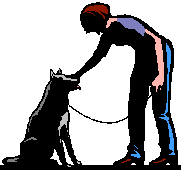 Teach your dog to wait quietly in the car while you put the leash on. It may
take several minutes for your dog to relax – be patient. Your dog should wait
for a release command to come out of the vehicle. An excitable dog who is
allowed to bolt from the car is likely to bolt from any door any time he gets
excited. Teach your dog to walk politely on a loose lead before you take your
dog to the dog park. A dog who pulls you to the gate is a dog that has been
rewarded for pulling. Turn around every time your dog starts to pull. It may
take several minutes to get to the gate, but your persistence will pay off big
in the long run. Your dog should also have a good understanding of the "Come"
command so that you can call him away from potentially hazardous situations
before he gets into trouble. Ideally, he should also be able to sit, heel, down
and stay. These commands give you better control and can help the dog feel more
secure. Your dog won't worry about himself as much when he feels that you are in
control, so he will be less likely to react with his instincts when trouble
arises. It's always a good idea to train your dog to do all of the basic
commands reliably around distractions. Teaching your dog several tricks will
help increase your dog's responsiveness too. A good dog training class can
provide you with all the knowledge and tools that your dog will need for life
and offers an excellent atmosphere in which to teach a dog to listen around
distractions. It is very frustrating, and sometimes hazardous, chasing a dog
around the dog park who doesn't listen when there's a crisis or when it's time
to leave. Another benefit of a constructive training class environment is that
your dog will be less likely to have problems around other dogs.
Teach your dog to wait quietly in the car while you put the leash on. It may
take several minutes for your dog to relax – be patient. Your dog should wait
for a release command to come out of the vehicle. An excitable dog who is
allowed to bolt from the car is likely to bolt from any door any time he gets
excited. Teach your dog to walk politely on a loose lead before you take your
dog to the dog park. A dog who pulls you to the gate is a dog that has been
rewarded for pulling. Turn around every time your dog starts to pull. It may
take several minutes to get to the gate, but your persistence will pay off big
in the long run. Your dog should also have a good understanding of the "Come"
command so that you can call him away from potentially hazardous situations
before he gets into trouble. Ideally, he should also be able to sit, heel, down
and stay. These commands give you better control and can help the dog feel more
secure. Your dog won't worry about himself as much when he feels that you are in
control, so he will be less likely to react with his instincts when trouble
arises. It's always a good idea to train your dog to do all of the basic
commands reliably around distractions. Teaching your dog several tricks will
help increase your dog's responsiveness too. A good dog training class can
provide you with all the knowledge and tools that your dog will need for life
and offers an excellent atmosphere in which to teach a dog to listen around
distractions. It is very frustrating, and sometimes hazardous, chasing a dog
around the dog park who doesn't listen when there's a crisis or when it's time
to leave. Another benefit of a constructive training class environment is that
your dog will be less likely to have problems around other dogs.
If you are taking more than one dog, it is wise to have one able and knowledgeable person for each of the dogs that you're taking. Check your dog's equipment, making sure he has a secure fitting collar with ID and a sturdy 6' lead. (There are valid arguments both for and against leaving collars on dogs while they are in dog parks. Dogs have been known to get their teeth caught in the collar of another dog, unable to free themselves. On the other hand, owners have had difficulty regaining control of their dogs when they didn't have a collar to grasp onto. The decision is ultimately yours.) Before you leave home, be sure to have a couple of stool bags in your pocket in case Fido does his business when a bag station isn't nearby. A personal water bottle or a water bowl in your car will be more sanitary than a community bowl to help prevent your dog from picking up viruses or bacteria from other dogs. Keep a first aid kit in the car for the dog – and it isn't a bad idea to have one for people too, just in case.
It's a good idea to escort your dog from the car to the dog park on lead, don't just open the car door and let the dog take off. Dogs frequently get very excited when they recognize where they are going. If your dog is over-stimulated, don't release him from the lead. Walk him around first to burn off some of that initial energy and enthusiasm. The highest percentage of conflicts arise immediately upon entry to the play area. If the dog park is fenced, it will be helpful to let your dog familiarize himself with the other dogs from outside the fence first. If you see any aggressive responses from the dogs inside the play area, come back later when there's a different mix of dogs. If your dog responds aggressively, it's time to go back to work on socialization again. If your dog remains calm, walk the dog into the area on lead using loose lead training until he calms down again. Never let your dog off of his lead if he is over-stimulated, aggressive or fearful! Try to enter the play area when there isn't a pack of dogs waiting to greet your dog at the gate.
Watch all the dogs in your area. Be on the lookout for body language that may be a precursor to more serious trouble. Look for fixed stares, stiff posture, a strut, an elevated head position, hackles raised or an upright "mechanical" tail wag, as these signs can precipitate a problem. Catching, redirecting or preventing a potential problem is much easier than tackling one that is already in progress. Try some sort of a "happy" distraction to see if you can break the cycle – no matter whose dog it is. If you believe a problem may be brewing, call your dog away from it.
Watch out for ponds where there may be fishing hooks and lines around the shores or in the water. Avoid areas where people fish! It is much safer for children to remain outside of the fenced areas at dog parks. Children can get caught in the middle of a dog fight or easily knocked down by over-exuberant large dogs at play. Some dogs that are taken to dog parks are not well socialized with children and can act aggressively towards them. Avoid feeding your dog treats when other dogs are nearby — food can trigger aggressive behavior and some dogs may be on strict diets or have other health issues. Toys can create possessive-aggressive behaviors too – monitor all the dogs in the vicinity for signs of this. Don't throw sticks or rocks to retrieve because dogs can swallow them, get splinters or get them lodged in their throats.
In spite of everyone's best efforts, a scrap or a full blown fight may break out and sometimes it can involve a number of dogs. People that run towards the fight screaming are only going to intensify the conflict. Approaches should be made calmly and quietly and every effort should be made to control the instigators first. The other dog(s) may break away if the main instigator is controlled. Attempting to grab a collar in a melee of gnashing teeth is inviting a nasty bite for yourself. The safest place to establish control of a fighting dog is from the rear – by the back legs, spinning the dog sort of like you used to do with your two year old when you played airplane. This will help to keep the dog's teeth from being able to contact you until the dog is in a calmer state or moved to a secure location.
 Etiquette
Obey posted park rules and clean up after your pet! Don't bring a female dog in season to the park. Respect other handler's and dog's spaces. Avoid letting your dog bully or rough-house with someone else's dog. If someone else's dog is creating a problem, ask them to remove their dog. If they don't cooperate, remove your dog. If your dog is the problem, accept responsibility and take your dog out of the area immediately. Remember, whatever damage your dog does to property, people or another dog is your responsibility.
Share these tips with other dog owners and help them to become responsible
dog handlers too. Together, you can make dog parks a fun, safe and constructive
place for dogs to be.
 For more information, contact:
Ted or Tiffany Terroux
Ted Terroux's Canine College
Colfax & Kipling Center
9797 W. Colfax Unit 3RR
Lakewood, CO 80215
303-232-1034
Web: www.tedterrouxdogtraining.com
e-mail:
tedterroux@att.net
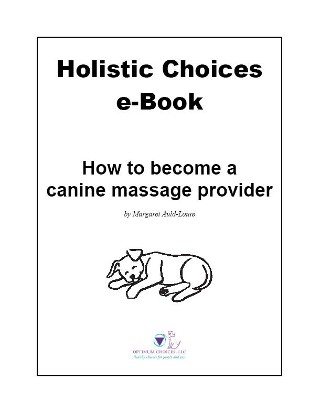
How to become a canine massage provider
(18 pages in electronic format, black & white or color print versions)
by Margaret Auld-Louie
Click picture to order online
review by Russell Louie
The traditional path of going to school, getting a degree and starting to work right after graduation simply does not materialize in this pioneering field of canine massage. As a pioneer in this new animal care profession, one must spend more time marketing and educating the public than doing massage. Traditional advertising does not seem to work. Ms. Auld-Louie shares the many non-traditional ways of marketing herself not found in other business text books.
I found the most unique section of this book to be the chapter entitled, "Finding your personal style." In this chapter, Ms. Auld-Louie draws on Jungian psychology to explain how to find a marketing technique that works for you rather than how the traditional business schools teach. She explains how to determine your own individual style that fits your personality. Everyone will recognize themselves in either the thinking/feeling or intuition/sensation pairs. With this knowledge Ms. Auld-Louie explains how to design a practice that works for your personality. The list of books and DVD references completes this "How to..." book for the pioneering profession of canine massage provider.
 |
Click here
to give your pet |
 |
General Information: Russell@OptimumChoices.com
Webmaster:
Webmaster@OptimumChoices.com
Newsletter Editor, Margaret Auld-Louie:
Editor@OptimumChoices.com
303-271-1649
866-305-2306 (toll-free)
Normal office hours are 11:00 AM – 7:00 PM Mountain Time (U.S.). If you would
like a return call outside those hours, please specify what days and times are
best.
416 Plateau Pky
Golden, CO 80403-1533
U.S.A.
|
|