 |
|
|
|
|
| |||||
|
|
Optimum ConnectionsNews from Optimum Choices, LLCDecember 2006To receive this newsletter in your e-mail, click here. Contents
Holiday Sale
|
| Myth | Truth |
| Commercial pet foods are safe and healthy for my pet. | There is no government regulation of pet foods. Many pet foods are produced by large conglomerates that also produce food for people. They can take food that is deemed "unfit for human consumption" and make a profit by putting it into pet food. Some pet foods have even been proven to contain the remains of euthanized animals. |
| Dry kibble is the best way to provide a healthy, balanced diet for dogs and cats. | Dry kibble is far removed from what our pets were designed to eat by Mother Nature. It is high in carbohydrates, which meat-eating animals (dogs & cats) have minimal need for. It is particularly bad for cats who are designed to get moisture from their food rather than by drinking water. One vet calls kibble "diabetes in a bag" for cats and other vets implicate it in the high rate of kidney disease in cats. |
| Dry kibble cleans pets' teeth. | Many holistic vets dispute this claim, stating that this is like eating pretzels to clean our teeth. Nature designed raw bones to clean our pets' teeth. |
| Flax oil adds beneficial essential fats to your dog or cat's food. | Many dogs and all cats are lacking the enzymes to convert the fats in flax oil to the DHA and EPA fats needed by the body. Fish oil or algae that naturally contain DHA and EPA are a better choice for providing essential fatty acids. |
| Raw food is dangerous for my pet. | Dogs and cats are designed by nature to thrive on a diet of raw meat, bones and organs (a whole prey animal). They have a short digestive tract to quickly process food so any bacteria that is not killed by their high level of stomach acid has little time to take up residence. |
| Raisins are healthy training treats for dogs. |
 Grapes
and raisins (dried grapes) have been found to cause kidney failure in
some dogs, even at low doses. They are best avoided in all dogs. For
more information, see the
ASPCA Poison Control website. Learn
about other human foods toxic to dogs and cats in our
Holistic Choices e-Book. Grapes
and raisins (dried grapes) have been found to cause kidney failure in
some dogs, even at low doses. They are best avoided in all dogs. For
more information, see the
ASPCA Poison Control website. Learn
about other human foods toxic to dogs and cats in our
Holistic Choices e-Book. |
| Table scraps are bad for my dog. | It depends on your diet. Organic meats and vegetables are good for us and dogs. Just avoid giving your pet anything that is toxic for dogs or cats (such as onions). And if you feed a home-made diet, make sure it is balanced. |
Following are some commonly believed myths about nutrition for people:
| Myth | Truth |
| Saturated fats are bad for you and clog your arteries. |
 According
to Mary Enig, PhD fat & oil researcher and the first scientist to sound
the alarm on trans fats (in 1978), not only are saturated fats healthy and
essential for our bodies, particularly growing children, but it is
mostly polyunsaturated fats that are clogging our arteries. Many
traditional cultures have eaten high levels of saturated fats while
remaining free of heart disease and other degenerative diseases. According
to Mary Enig, PhD fat & oil researcher and the first scientist to sound
the alarm on trans fats (in 1978), not only are saturated fats healthy and
essential for our bodies, particularly growing children, but it is
mostly polyunsaturated fats that are clogging our arteries. Many
traditional cultures have eaten high levels of saturated fats while
remaining free of heart disease and other degenerative diseases. |
| A high-carbohydrate/low-fat diet is "heart healthy" and good for you. | High-carbohydrate diets tend to increase insulin in the body, which is now known to cause inflammation leading to heart disease, cancer and diabetes. Low-fat diets have been associated with depression, violence, cancer and fatigue, as well as growth problems, failure to thrive and learning disabilities in children. |
| Soy is a healthy food to eat. | Soy is full of toxins and phytoestrogens that can depress the thyroid gland, lower testosterone levels, cause infertility and possibly promote breast cancer. Unlike other beans, these toxins can only be neutralized by fermentation, not by soaking or cooking. |
| A vegetarian diet is the healthiest way to eat. | Animal foods are full of essential nutrients that are needed for a healthy body, such as vitamins A, B12 and D. The pro-vitamin A found in plant foods (beta carotene) is not easily converted to Vitamin A, particularly by children. Numerous people have developed poor health on vegetarian diets due to lack of nutrients, such as those needed by the immune system. |
| Salt is bad for you. | Refined salt is bad for you but whole, unrefined sea salt is very beneficial. The body needs salt to maintain essential bodily functions and make substances such as hydrochloric acid in the stomach. |
| Whole grains are healthy for you. | Whole grains and seeds are difficult to digest and block mineral absorption, unless carefully fermented and soaked to neutralize these substances (as traditional cultures did.) |
| You can get all the vitamins and minerals you need if you eat a "balanced diet". | While isolated nutritional supplements have their own dangers, food alone will probably not provide all the nutrients you need, given our mineral-depleted soils. The mineral content of our food has greatly decreased over the past 100 years, making supplementation with superfoods or other natural sources of minerals essential. |
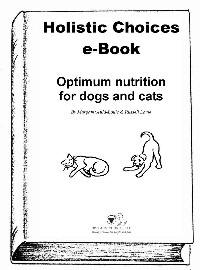
Are you still wondering about what is true or false? How can you know the truth when there is so much conflicting information? We cover all these myths and more in much greater detail in our Holistic Choices e-Books on nutrition: Optimum nutrition for dogs and cats (17 pages) and Optimum nutrition for people (19 pages). To order, go to: www.optimumchoices.com/e-books.htm.

click picture to order from Amazon.com
review by Margaret Auld-Louie
We have been talking this month about nutritional myths and there are many myths around milk such as: milk is bad for you, no mammal needs milk after weaning, raw milk is dangerous, only pasteurized milk is safe, and raw milk has no health benefits over pasteurized milk. This scholarly, well-researched book covers the history of milk use from ancient times to today and explains the benefits of raw vs. pasteurized milk. For thousands of years, people have thrived on raw milk and in the early 1900's, before the advent of antibiotics and other "miracle" drugs, raw milk was used to heal people, even at the prestigious Mayo Clinic. Dr. Bernard Jensen used raw goat milk at his clinic to heal patients, as described in his book on goat milk. Milk has been used by humans longer than grains, which only came to be cultivated 10,000 years ago, whereas humans herded animals long before they began farming.
Milk was required to be pasteurized by the government in the late 1800's/early 1900's because of the filthy, crowded conditions the cows were kept in, that made this necessary. To provide milk cheaply for people in cities, cows were crammed together in filthy buildings next to breweries and fed the leftover brewery mash. These unhealthy cows were then milked by unhealthy people and the milk was not kept cool, so no wonder the milk was contaminated. Rather than raise the cows in healthy conditions on their natural diet (eating grass in outdoor pastures), the milk was pasteurized to kill off the bacteria and make it safe for consumption. This thin, watery milk was still not healthy, since it takes healthy cows on an optimal diet to produce rich milk that is full of nutrients. It had chalk and other ingredients added to it to give it the appearance of healthy, white milk.
Today there are raw milk dairies that raise cows in pristine conditions and let them graze outside in the sunshine, producing milk that is superior in nutritional quality. One dairy, Organic Pastures in California, has a mobile milking apparatus so the cows don't even have to come inside to be milked. After reading this book, you may be inspired to add raw dairy products to your diet, for their health benefits. Unfortunately, raw dairy products cannot be legally sold in most stores in the US (and most other Westernized countries), except for aged cheese. California, Connecticut, Maine, New Mexico and South Carolina are the only states allowing the sale of raw milk in stores. In 28 states, it can be purchased directly from the farmer, typically through a "cow share" or "goat share", where you "own" part of the animal and are therefore getting "your" milk from it. Acquiring raw milk can be difficult at times, as the government is quick to pounce on raw milk producers and accuse them of causing outbreaks of disease (such as during the recent spinach contamination scare, where Organic Pastures dairy was targeted). This has happened even to pristine dairies that have always tested free of any pathogenic bacteria. While there is some risk to drinking raw milk, the risks are far overstated by the government and in most cases are outweighed by the benefits. It is generally only dangerous to immune-compromised individuals, such as people on chemotherapy or with AIDS.
If you prefer goat milk, which can be easier to digest for many people, there are some farms offering "goat shares" but they are rare. You may have to seek out someone that keeps a few goats and is willing to sell you some milk "unofficially". Raw milk can also be very beneficial for our pets, unlike pasteurized milk which is difficult for them to digest. Raw milk, like raw meat, is high in enzymes, making it easy for dogs and cats to digest and healing to their bodies. If you are familiar with the Pottenger cat studies, you may remember that his cats on raw milk thrived whereas the ones on pasteurized milk did poorly.
If you want to find sources to purchase raw milk, after reading this book, go to www.realmilk.org. Also, see this interesting article on the raw milk controversy recently published by The Washington Post: The Raw Deal.
 |
Click here
to give your pet |
 |
General Information: Russell@OptimumChoices.com
Webmaster:
Webmaster@OptimumChoices.com
Newsletter Editor, Margaret Auld-Louie:
Editor@OptimumChoices.com
303-271-1649
866-305-2306 (toll-free)
Normal office hours are 11:00 AM – 7:00 PM Mountain Time (U.S.). If you would
like a return call outside those hours, please specify what days and times are
best.
416 Plateau Pky
Golden, CO 80403-1533
U.S.A.
|
|