Welcome to the February 2007 edition of Optimum Connections, the monthly
e-newsletter from Russell Louie and Margaret Auld-Louie at Optimum Choices, LLC.
This newsletter is sent to the friends and customers of Russell & Margaret as
well as people who signed up for a drawing at our booth at a fair. If you wish
to unsubscribe, see the bottom of this e-mail for instructions. To receive this newsletter in your e-mail,
click
here.
February is national pet dental health month. Did you know that poor dental health can lead to
other health problems including kidney, lung, heart and
liver issues? Did you know that your pet's dental health
is closely related to diet? Many holistic vets state that commercial
pet foods lead to poor dental health in our pets. They
also state that dry kibble does not actually clean our
pets' teeth any more than pretzels clean human's teeth. Learn
more about myths like that and how to feed a healthy diet,
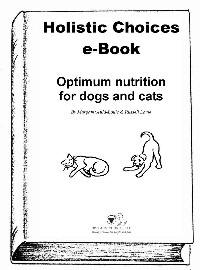
leading to good dental health, with our e-book on Optimum nutrition for dogs and cats.
Click on the e-Book picture to purchase your copy online
or choose one of the options below to get a
FREE copy:
Purchase 3 bottles of
BioPreparation and get our e-Book: Optimum nutrition for dogs
and cats FREE.
You must mention "February Sale" in your phone order, e-mail or shopping cart
(in the Special Instructions box). The e-Book will
not show up in your shopping cart but will be e-mailed
when we process your order. Sale good thru midnight MST, February
28, 2007.
We also encourage you to get regular
professional cleaning of your pet's teeth.
Click
here for practitioners in the Denver/Boulder area
that offer anesthesia-free teeth cleaning. We use this
service regularly for our pets to maintain the health of
their teeth and gums.
The Colorado Alliance of Animal Owners Rights was established in 2006 to
protect your right to use complementary and alternative health care methods
for your animal in Colorado. If you live in Colorado and use any of the following practitioners
with your animal, this impacts you: nutritionists, chiropractors, massage practitioners,
physical therapists, equine dentists, acupressurists, energy medicine
practitioners, Healing Touch for Animals® Practitioners, Reiki
practitioners, TTouch practitioners, aromatherapists, homeopaths, trainers,
animal communicators and farriers.
President of CAAOR, Lisa Speaker and Board Members Carol Komitor, Turie
Norman, and Nancy Zidonis are working with Colorado State Representative,
District 64, Wes McKinley to introduce legislation to protect the rights of
owners to choose therapeutic alternatives. Rep. McKinley is the
Vice-Chairman of the Agriculture, Livestock and Natural Resources Committee.
The bill will be introduced in March 2007. Deb Grosskopf will be
designing a petition e-mail/site that will be available on the current
website. We encourage you to lend your support with time or money. Go to
www.caaor.org for more
details and join the Yahoo discussion group here:
Join
Yahoo Group.
Lisa Speaker will be presenting a talk on CAAOR at the next meeting of the
Colorado Association of Animal Massage & Bodywork, Wednesday, February 28,
2007 at 7 pm. Concerned pet owners and other types of animal practitioners
besides animal massage are also invited to this talk. Come learn how to protect your rights to
provide the health care you want for your pet. Click here for meeting
details: CAAOR Talk
Optimum Choices will be exhibiting together with Natural Pet at the Colorado Family Pet Expo on
March 10-11, 2007 at the Colorado Convention Center. For more information,
click
here.
Sunday, March 18, 2007, 1:00-3:00 pm
Sage Valley Pet Center, Golden, CO
Dogs have muscles too! Massage is no longer just for humans--dogs can
benefit just as much as humans. Come learn how to help your dog feel better
with massage and acupressure. Class topics will include:
Benefits of massage for dogs
How to do a simple relaxing massage for your dog
Acupressure points that provide specific
benefits
Tuning in to your dog energetically
How massage helps older dogs feel better
Registration and fees: For more
details, click here.
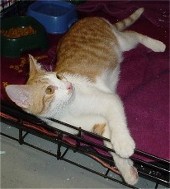
It is now February and no one has stepped forward yet to adopt this sweet
kitty that lost its home in July. Won't you consider opening your heart to a
Katrina animal?
Cajun
was rescued from a shelter
in Louisiana following Hurricane Katrina, brought to Denver in September
2005 and quickly found a home. He thought he had his forever home, but
the owner's situation changed and he became available again in July 2006
(through no fault of his own).
Click here for more details.
There is a heated debate on whether an infected tooth and the bacteria involved
in the accompanying infection can cause other illnesses throughout the body.
Microbes, which may be present in dead teeth, may be impossible to eliminate no
matter how successful a root canal. These bad organisms are not actually in the
canal portion of the tooth but in the tiny microscopic tubules which comprise
the dentin (the material below the enamel). Some say these microbes in the
dentinal tubules pose a health problem and can lead to other diseases throughout
the body. See
www.drshankland.com/root_canal.html. Fortunately, there has been clinical
research on essential oil usage in dental hygiene. Over 100 studies have
documented how essential oils kill the microbes that cause tooth decay and
gingivitis. According to Christine Charles and colleagues in a study published
by the Journal of the American Dental Association, "The efficacy of an
essential-oil-containing antiseptic mouthrinse has been demonstrated in numerous
double-blind clinical studies." A 1999 study published in the Journal of
Clinical Periodontology showed that a mouthrinse containing thymol, methyl
salycilate (wintergreen), menthol (peppermint) and eucalyptol (Eucalyptus
globulus) was far more effective than stannous fluoride antiseptic. Now you can
benefit from this study by using a toothpaste containing this very same
essential oil mixture.
Product Information
Contains essential oils of wintergreen, peppermint, and the blend Thieves
(clove, lemon, cinnamon, eucalyptus and rosemary). Get the antiviral,
antiseptic, antibacterial, anti-infectious power of Thieves® in your toothpaste.
Keep those pesky cavities away. Avoid root canals by killing microbes before
they set in.
Personal testimony
I had been using Young Living's Thieves Dentarome toothpaste from January,
2003–January, 2005. My total dental expenses, including checkups, fillings and
any root canals for this two year period was approximately $500. Around January,
2005, I stopped using Dentarome Toothpaste for the following reasons:
Dentarome Toothpaste contains peppermint, and mint is known to interfere
with homeopathic remedies. At that time, I was taking many homeopathic
remedies.
My wife had three different toothpaste brands open and they were being
used up very slowly.
I recently tabulated my dental expenses from January, 2005–January, 2007 and the
total was over $1,500 (three times the previous two-year period). While this is
not scientific proof of the effectiveness of Thieves Dentarome Toothpaste, it
convinced me to go back to using Thieves Dentarome Toothpaste. While the cost of
Thieves Dentarome Toothpaste is more expensive than other natural brands, I
don’t think the savings is worth the extra $1,000 I spent in two years on dental
care. I can buy a lot of toothpaste for $500/year. No more root canals for me—I am going back to using Young Living's Thieves Dentarome Toothpaste.
These statements have not been evaluated by the Food and Drug Administration.
This product is not intended to diagnose, treat, cure, or prevent any disease.
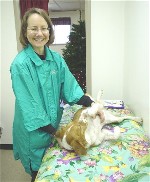
When you think of massage for dogs, what comes to mind?
Many people assume massage is a silly idea for dogs, an
"over the top" luxury item for spoiled dogs by owners
who cater to their "fur children", treating them like
people instead of dogs. You may equate dog massage with
other frivolous items for dogs such as painting their
toenails or dressing them in cute outfits. However,
massage is not just a relaxing "spa session" for dogs.
Just as with human massage, canine massage can have
therapeutic benefits for dogs. This is particularly true
if you take your dog to a professional who has extensive
training in canine massage.
How do you know if your dog could benefit from a
professional massage? Most dogs these days need
professional massage to maintain optimal wellness. The
reason for this is that we have altered their structure
through centuries of breeding. Since dogs are no longer
built like wolves, they no longer have optimal structure
for good movement. Their structure has been further
compromised during the last few decades due to small
show rings that favor dogs with shorter strides, leading
them to win (and be bred) rather than the dogs with
longer strides and better structure. This altered
structure leads to fewer muscles as well as muscles that
don't function optimally. As the dog ages, the joints
break down, since the joints take more pounding than
they were designed for. While massage won't correct
these structural problems, it can help the muscles
function better, thus reducing muscle soreness and joint
damage. Since most dogs have suboptimal structure,
almost all dogs can benefit from professional massage.
Even mixed breed dogs have structural issues, since they
are a mixture of purebreds with this problem.
Dogs can also benefit from professional massage for the
same reasons as people. If you go on a long hike
on the weekend after working at a desk all week, you may
get sore or even injured muscles. The same thing can
happen if you take your dog with you hiking. Dogs are
just as susceptible to "weekend athlete syndrome" as
people. A hard play session at the doggie daycare or dog
park could also result in injury or soreness if your dog
is not accustomed to that level of activity on a regular
basis (several times a week). You may not know that your
dog is experiencing pain from these activities since
pack animals instinctively hide their pain to avoid
being thrown out of the pack.
Dogs
that are professional athletes, such as dogs competing
in agility trials, can be susceptible to injuries and
problems just like human athletes. Agility dogs perform
actions that are not entirely natural to their
physiology, such as the twisting and shoulder action
required when going through the weave poles. And their
joints take a pounding when performing jumps as well as
coming down steep ramps, such as the A frame or dog walk
obstacles. Just as human athletes have learned the
benefit of professional massage in both preventing and
treating injuries, informed dog owners have learned to
provide regular professional massage for their doggie
athletes.
What if your dog is inactive rather than athletic? If
your dog is inactive due to illness, injury or surgery,
massage can help during the rehabilitation period in
returning to normal function. It may speed up the
recovery process and help prevent lingering problems. As
the benefits of canine massage and other modalities are
becoming more widely known, it is now common to find
facilities in large cities offering rehabilitative
services for dogs including swimming, underwater
treadmills, physical therapy and massage therapy.
If your dog is becoming elderly, massage can be
particularly beneficial. Unless a dog is very active,
such as competing in agility most of its life or doing
herding, its muscles tend to get stiff beginning in
middle age and progressing with each year. When I work
on a typical pet dog, I can almost tell its age by the
stiffness of its muscles. In old age, the muscles also
begin to atrophy. Older dogs are often also arthritic,
with the pain discouraging exercise. The reduced
activity leads to further stiffness and pain, which
reduces activity even more, in a vicious cycle.
Therefore, massage can be especially beneficial for
middle-aged and elderly dogs in reducing pain levels,
improving muscle condition and increasing flexibility
and range of motion. When the dog feels better, they can
be more active, which helps counteract the progression
of arthritis and stiffness.
Why
would you want to take your dog to a professional rather
than just doing massage yourself? Some owners decline
professional massage, stating that "I massage my dog
every day myself". While massaging your dog is
wonderfully beneficial, your dog can receive even more
benefit by going to a trained professional. You may get
back rubs from your spouse but if you have any kind of
muscle problems or injury, you probably realize that a
professional massage therapist has the training to
better assist you. (Also, your spouse may not want to spend
a whole hour giving you a full-body treatment!)
Professional canine massage providers likewise are
trained in addressing specific issues that your dog may
have, going beyond just a "feel good" massage session.
They typically have several hundred hours of training,
including education in anatomy, physiology, orthopedic
pathology, gait and structure, as well as massage
techniques. Even if you took a weekend course in doggie
massage, that is not equivalent to the training that a
professional provider receives and does not replace a
professional massage session for your dog.
This makes more sense if you consider it from a human
massage perspective. I took a community course in
Shiatsu massage from the Boulder College of Massage
Therapy years ago. Their "community courses" are short
courses for the public that enable them to learn enough
to work informally on friends and family. While it was
an excellent course, I would not presume to compare my
level of expertise in Shiatsu with a professional that
has completed the entire course of study at that school
(which is 1,000 hours or more). And I would never offer
Shiatsu professionally for humans because I don't have
the expertise to do so. When I went to a professional
graduate of that school and received Shiatsu, there was
a world of difference in the quality between his
sessions and the treatment I received from students in
my class. To look at it another way, you wouldn't take
your dog to someone for surgery that is not a
veterinarian, since they have the training necessary to
perform this properly. Massage is obviously safer than
surgery but there are cases of dogs that have been
harmed by insufficiently trained individuals. And there
are some circumstances where massage is not beneficial
for dogs. A professional is trained to recognize whether
massage is appropriate or not. To learn more, see my
article from The Whole Dog Journal here:
How to select a professional canine massage provider.
To summarize how professional massage can help your dog,
following are some of the possible benefits:
Reduce pain and soreness
Increase flexibility and range of motion
Enhance muscle tone
Promote recovery from injuries or surgery
Improve circulation
Improve gait and structure
Boost the immune system
Assist with the elimination of wastes and toxins
Aid healing of soft tissue injuries
Help release habitual "holding patterns" found in muscles
Increase the supply of blood and nutrients to the tissues
Promote healthy skin and coat
Encourage relaxation and decrease anxiety
Maintain wellness
Professional
massage has been very popular for years among horse
owners and not because they are pampering their horse.
It's because a horse that can't move, can't be ridden.
Horse owners get massages for their horses because it
helps their horses move and feel better. Dog show exhibitors have
known for years the
benefits of professional massage in helping their dog to feel, look
and move better. You will usually find canine massage
therapy booths at dog shows. Exhibitors get regular massages for
their dogs, not to pamper them but to enable them to perform better in the ring
and recover quicker from any injuries or problems. While your
dog may not be a champion show dog and you probably don't ride your dog
like a horse (unless it's an Irish Wolfhound), wouldn't you like your
dog to feel and move better as well?
Massage is not just for humans anymore...dogs have
muscles, too. Optimum Choices
offers professional canine massage to help your dog
achieve optimum wellness. To learn more, see:
www.optimumchoices.com/dog_massage.htm.
This book is an excellent compilation of alternative
treatments to help owners whose cats have Feline AIDS
(also know as Feline Immunodeficiency Virus or FIV) from
someone who has been there. Tom Hapka's cat, Jac
(featured on the cover), suffered from FIV and Tom was
able to prevent Jac from dying immediately in 1995 and
then extended his life another 2-1/2 years by using
alternative modalities. His cat died of old age, not FIV.
Tom has a website with information (www.felineaids.org)
and has provided consulting for hundreds of cat owners,
helping their cats live longer, healthier lives. His
wisdom is now compiled into this book, just published in
January 2007.
The book explains what FIV is and then covers a range of holistic modalities
including diet, vitamins, homeopathy, chiropractic and herbs. The
BioPreparation algae product for
pets (that Optimum Choices offers) is mentioned briefly as a valuable,
nutrient-rich addition to the diet. (Unfortunately, this product was not
available in the U.S. at the time Tom's cat was alive.) Tom's recommendations
start with improving the diet, which is the cornerstone of good health. He
explains why good nutrition is so helpful and the importance of feeding raw meat
to cats. My only quarrel with his recommendations is that he does not explain
the importance of including raw bones with raw meat or adding calcium to get the
proper calcium/phosphorus balance. (Raw muscle meat fed alone leads to a
deficiency of calcium over time). Recognizing the difficulty of getting sick
cats to eat, Tom offers a variety of dietary suggestions including raw meats,
cooked fish, whole milk, eggs, canned tuna, deli meats, baby foods and frozen
pre-made raw foods. We wish he had emphasized that last category more. It can be
difficult for an owner to create a completely balanced homemade raw diet. A good
alternative is the balanced frozen raw diets available at many natural pet
stores now. However, it can take trying several brands before finding the ones
that your cat likes and tolerates well (in our experience with our cat). We
would also be less enthusiastic than he is about feeding milk to cats, unless it
happens to be raw milk. The Pottenger cat studies, which he cites, found that
cats on raw milk thrived while those on pasteurized milk did poorly. But, as he
says, the one key rule is to "keep your cat eating at all costs", which may mean
feeding something less than optimal.
Tom provides a particularly good explanation of homeopathy and the
differences between classical homeopathy and using combination remedies. He
explains when the combination remedies can be valuable to use vs. the single
remedies prescribed by a classical homeopath. I found that particularly
intriguing since we take our pets to a classical homeopathic vet and I have
experienced first-hand the frustration with trying to find the correct single
remedy (I don't think we have ever hit on the perfect remedy for any of our
pets). He touches on herbs briefly and explains the dangers of using them
without professional help, particularly in cats. His section on chiropractic is
quite interesting, since Tom describes his own experience in 2000 when he was
almost killed by a chiropractic adjustment. When he received a "high velocity"
adjustment, his vertebral artery was torn, causing a stroke and brain damage. He
is still recovering from the effects of that injury. Apparently some animals
have been damaged in this way as well by chiropractic, which I did not know.
Naturally, this makes him extremely cautious in recommending chiropractic care
for cats. In our experience, chiropractic care can be very beneficial for cats
and dogs, providing benefits not offered by other modalities. But we would agree
with his cautions about selecting a chiropractor trained and experienced in
working on animals as well as someone that works very gently.
Tom explains how the conventional veterinary care for Feline AIDS can be
harmful, such as indiscriminate use of antibiotics or steroids, as well as
providing guidelines for using them safely. He explains why using antibiotics as
a preventive measure is a flawed strategy that does not work, but this is
commonly done by conventional vets. The current Animal Wellness Magazine has a
letter from a reader to the holistic vet describing her vet's recommendation to
use antibiotics preventively for her FIV positive cat. So Tom's guidelines for
safe use of antibiotics are very valuable for owners who have to decide what
course of treatment to follow with their cat.
Tom then covers the common symptoms experienced by cats with FIV and how to
treat them naturally and effectively. Finally he answers some frequently asked
questions about FIV, such as whether to vaccinate (the answer is "NO") and lists
resources for the modalities described in his book. While this is a small book,
it is packed with information. Despite our minor disagreements with some of his
points, we would highly recommend this book for any cat owner whose cat is
either sick with FIV or FIV positive.
Editor's Note: Read our
Silent Epidemic
article on how Dr. Plechner had a 70% FIV recovery rate using his
hormone balancing protocol and how
BioPreparation can nutritionally boost the endocrine-immune systems for
a totally holistic solution.
303-271-1649 866-305-2306 (toll-free) Normal office hours are 11:00 AM – 7:00 PM Mountain Time (U.S.). If you would
like a return call outside those hours, please specify what days and times are
best.
Nothing on this website has been evaluated by the FDA. This information
is not intended to diagnose, treat, cure or prevent any disease. Please
see a qualified healthcare practitioner for any disease or illness.






 Colorado
Family Pet Expo
Colorado
Family Pet Expo

 Even mixed breed dogs have structural issues, since they
are a mixture of purebreds with this problem.
Even mixed breed dogs have structural issues, since they
are a mixture of purebreds with this problem. Dogs
that are professional athletes, such as dogs competing
in agility trials, can be susceptible to injuries and
problems just like human athletes. Agility dogs perform
actions that are not entirely natural to their
physiology, such as the twisting and shoulder action
required when going through the weave poles. And their
joints take a pounding when performing jumps as well as
coming down steep ramps, such as the A frame or dog walk
obstacles. Just as human athletes have learned the
benefit of professional massage in both preventing and
treating injuries, informed dog owners have learned to
provide regular professional massage for their doggie
athletes.
Dogs
that are professional athletes, such as dogs competing
in agility trials, can be susceptible to injuries and
problems just like human athletes. Agility dogs perform
actions that are not entirely natural to their
physiology, such as the twisting and shoulder action
required when going through the weave poles. And their
joints take a pounding when performing jumps as well as
coming down steep ramps, such as the A frame or dog walk
obstacles. Just as human athletes have learned the
benefit of professional massage in both preventing and
treating injuries, informed dog owners have learned to
provide regular professional massage for their doggie
athletes. Why
would you want to take your dog to a professional rather
than just doing massage yourself? Some owners decline
professional massage, stating that "I massage my dog
every day myself". While massaging your dog is
wonderfully beneficial, your dog can receive even more
benefit by going to a trained professional. You may get
back rubs from your spouse but if you have any kind of
muscle problems or injury, you probably realize that a
professional massage therapist has the training to
better assist you. (Also, your spouse may not want to spend
a whole hour giving you a full-body treatment!)
Professional canine massage providers likewise are
trained in addressing specific issues that your dog may
have, going beyond just a "feel good" massage session.
They typically have several hundred hours of training,
including education in anatomy, physiology, orthopedic
pathology, gait and structure, as well as massage
techniques. Even if you took a weekend course in doggie
massage, that is not equivalent to the training that a
professional provider receives and does not replace a
professional massage session for your dog.
Why
would you want to take your dog to a professional rather
than just doing massage yourself? Some owners decline
professional massage, stating that "I massage my dog
every day myself". While massaging your dog is
wonderfully beneficial, your dog can receive even more
benefit by going to a trained professional. You may get
back rubs from your spouse but if you have any kind of
muscle problems or injury, you probably realize that a
professional massage therapist has the training to
better assist you. (Also, your spouse may not want to spend
a whole hour giving you a full-body treatment!)
Professional canine massage providers likewise are
trained in addressing specific issues that your dog may
have, going beyond just a "feel good" massage session.
They typically have several hundred hours of training,
including education in anatomy, physiology, orthopedic
pathology, gait and structure, as well as massage
techniques. Even if you took a weekend course in doggie
massage, that is not equivalent to the training that a
professional provider receives and does not replace a
professional massage session for your dog. 
 Professional
massage has been very popular for years among horse
owners and not because they are pampering their horse.
It's because a horse that can't move, can't be ridden.
Horse owners get massages for their horses because it
helps their horses move and feel better. Dog show exhibitors have
known for years the
benefits of professional massage in helping their dog to feel, look
and move better. You will usually find canine massage
therapy booths at dog shows. Exhibitors get regular massages for
their dogs, not to pamper them but to enable them to perform better in the ring
and recover quicker from any injuries or problems. While your
dog may not be a champion show dog and you probably don't ride your dog
like a horse (unless it's an Irish Wolfhound), wouldn't you like your
dog to feel and move better as well?
Professional
massage has been very popular for years among horse
owners and not because they are pampering their horse.
It's because a horse that can't move, can't be ridden.
Horse owners get massages for their horses because it
helps their horses move and feel better. Dog show exhibitors have
known for years the
benefits of professional massage in helping their dog to feel, look
and move better. You will usually find canine massage
therapy booths at dog shows. Exhibitors get regular massages for
their dogs, not to pamper them but to enable them to perform better in the ring
and recover quicker from any injuries or problems. While your
dog may not be a champion show dog and you probably don't ride your dog
like a horse (unless it's an Irish Wolfhound), wouldn't you like your
dog to feel and move better as well? 